

If your Range Rover Evoque has started rattling on cold mornings, the oil level keeps creeping up between services, or a "Restricted Performance" message has flashed up on the dash, you're not imagining things, and you're not alone. The 2.0-litre Ingenium engine, fitted across most post-2015 Evoques, has a well-documented set of failure points that owners, independent garages, and JLR's own service bulletins have flagged repeatedly.
This isn't a scare piece. It's a practical breakdown of exactly what goes wrong with the Ingenium engine, why it happens, what it costs to put right, and how to tell whether your car needs attention now or can wait until its next service. If you're trying to work out whether that noise under the bonnet is nothing or the start of something expensive, this is the page to read before you do anything else.
What Are the Most Common Range Rover Evoque Ingenium Engine Problems?
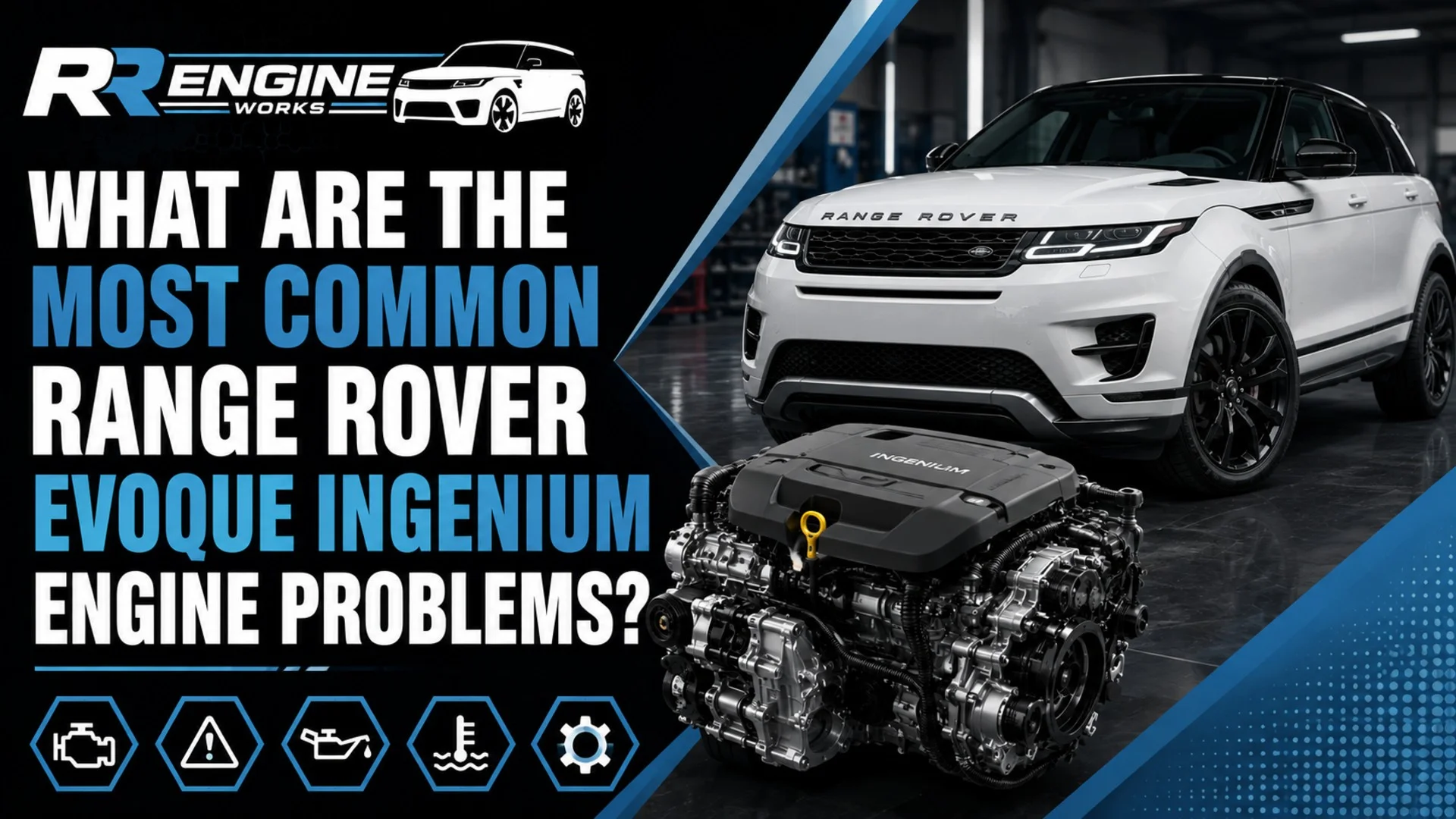
The Ingenium engine, Jaguar Land Rover's in-house four-cylinder unit, used across the Evoque, Discovery Sport, and several Jaguar models, replaced the older Ford-derived engines from around 2015 onwards. It's more efficient on paper, but it introduced a handful of recurring mechanical and emissions-related faults that weren't as prevalent in earlier Land Rover engines.
Four problem areas come up again and again in workshops and owner forums:
- Timing chain wear, the internal timing chain, tensioner, and guides degrade faster than expected on many units, particularly on higher-mileage diesels.
- Oil dilution, diesel fuel finding its way into the engine oil during DPF regeneration, thinning the oil and reducing its ability to protect moving parts.
- Turbocharger failure, bearing wear and oil starvation in the turbo, often linked back to the oil dilution issue above.
- EGR and balance shaft faults, carbon buildup in the EGR valve and, on some engines, balance shaft bearing wear that produces a distinctive whine.
Why These Faults Are Often Linked, Not Isolated
Here's what most guides miss: these problems rarely happen in isolation. They form a chain reaction.
Short journeys prevent the DPF from regenerating properly. That triggers extra fuel injection to force a "burn," and some of that unburned diesel ends up in the sump. Diluted oil then loses its lubricating properties, which accelerates timing chain wear and starves the turbocharger of clean, properly pressurised oil. One root cause, short-distance driving, can end up presenting as three or four "unrelated" faults over a matter of months.
Understanding that chain of events matters because it changes how you approach diagnosis. A rattling engine and a turbo whistle six months apart might not be two separate problems, they might be the same problem, caught at two different stages.
Timing Chain Wear and Tensioner Failure
The timing chain keeps the crankshaft and camshaft in sync. On the Ingenium diesel, the chain, tensioner, and plastic guides are known to wear well before the mileage you'd expect on a modern engine, some cases appear under 60,000 miles. As the chain stretches and the guides shed material, that debris can block oil pickup points, compounding the damage elsewhere in the engine.
Oil Dilution Caused by DPF Regeneration
This is arguably the most important fault to understand, because it's largely preventable with the right driving pattern and service schedule, more on that below.
Turbocharger Failure and Loss of Boost
Turbo bearings rely on clean, adequately pressurised oil. When oil is diluted or its level runs low, the turbo is often the first major component to suffer, showing up as whining, whistling, or a noticeable drop in power delivery.
EGR Valve and Balance Shaft Faults
The EGR valve can gum up with carbon over time, restricting airflow and triggering warning lights. Separately, some Ingenium units develop a balance shaft bearing whine, a less commonly discussed issue, but one that owner communities mention consistently enough that it's worth checking for during any inspection.
What Symptoms Mean Your Evoque's Ingenium Engine Has a Problem?
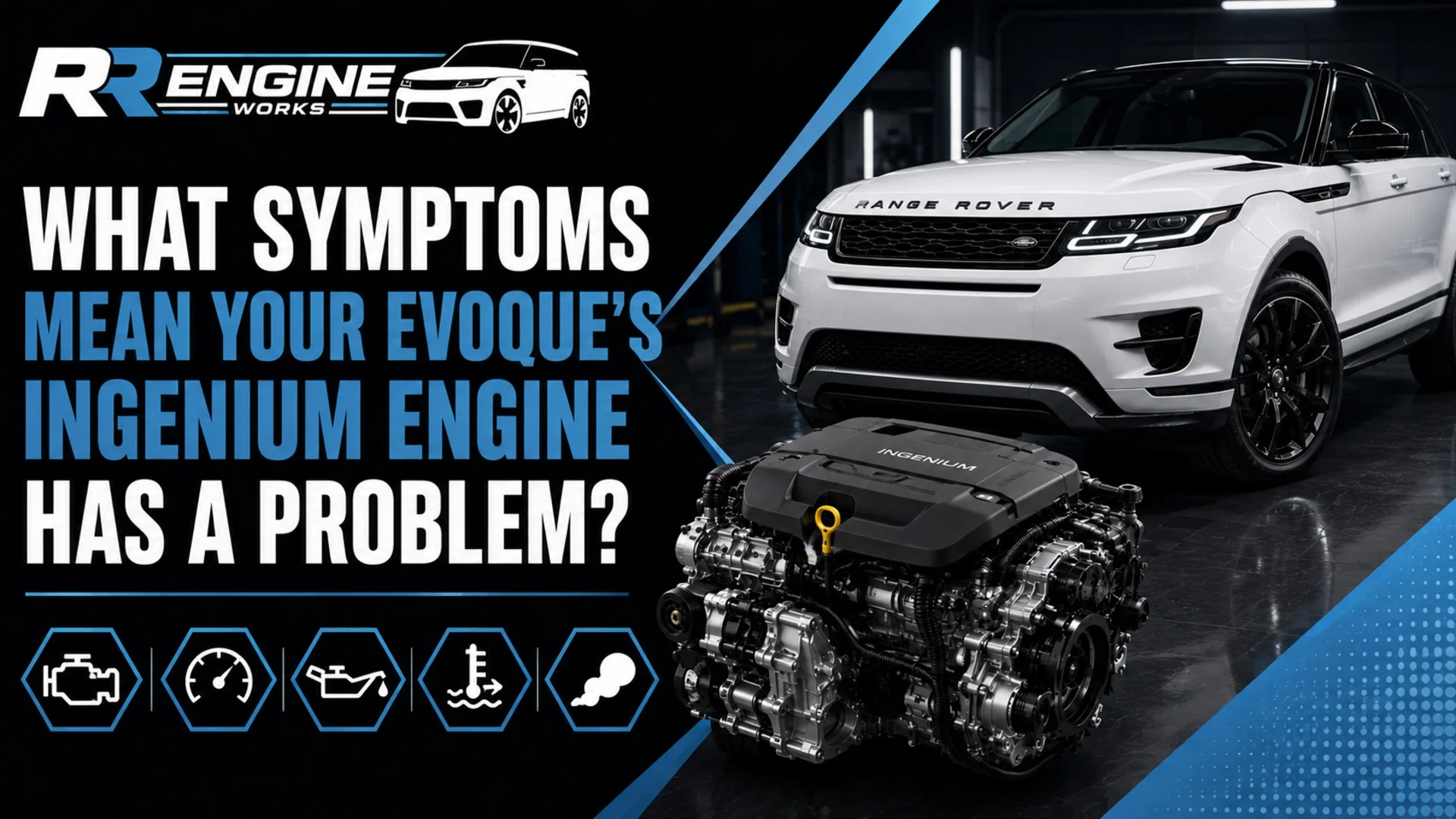
Most Evoque owners don't come to this page because they've read a service bulletin, they come because something feels or sounds wrong. Here's how to translate what you're noticing into what's actually happening.
- A rattle or tick on cold start that fades after a few seconds usually points to timing chain wear.
- The oil level rising between services, rather than falling, is a strong indicator of diesel oil dilution.
- A whistling or whining noise under acceleration, paired with sluggish power delivery, typically suggests the turbocharger.
- A "Restricted Performance" message on the dash is the ECU protecting the engine, it can be triggered by the timing system, DPF, boost pressure, or fuel system, so it always needs a proper diagnostic scan rather than a guess.
- Difficult starting or rough idling often points toward injectors, fuel pressure, or compression issues further down the line.
Symptom-to-Cause Table: What Your Evoque Is Telling You
Symptom | Likely Cause | Risk Level |
| Cold-start rattle | Timing chain / tensioner wear | High |
| Rising oil level | Diesel oil dilution | High |
| Turbo whistle + power loss | Turbocharger wear | Medium–High |
| Blue smoke on start-up | Turbo or oil-related | High |
| "Restricted Performance" alert | Timing, DPF, boost, or fuel system | High |
| DPF warning light | Blocked filter / failed regeneration | Medium–High |
| Engine knocking | Internal engine damage | Critical |
| Difficult starting, rough idle | Injectors, fuel pressure, timing | High |
When a Symptom Means Stop Driving Immediately
Most of the faults above can be booked in and dealt with sensibly. One can't wait: an audible knocking sound from the engine. That's a sign of potential internal damage, bearing failure, timing deviation, or piston contact, and continuing to drive on it can turn a repairable fault into a full engine replacement. If you hear a knock, stop the car and arrange recovery rather than driving it to a garage.
How Much Does It Cost to Repair a Range Rover Evoque Ingenium Engine?
This is usually the question underneath all the others. Costs vary depending on how early the fault is caught, so it's worth treating "cost of ignoring it" as part of the equation, not just "cost of the repair."
Timing Chain Replacement Cost UK
A timing chain replacement on the Ingenium engine is a labour-intensive job, the chain sits at the back of the engine, not the front, which means significant disassembly to reach it. Real-world workshop cases have shown bills in the region of £2,000–£2,500 including VAT for a full chain, tensioner, and guide replacement, though the exact figure depends on whether any secondary damage (like a contaminated oil pickup or worn bearings) is found once the engine is opened up.
Engine Rebuild vs Full Engine Replacement Cost
Once a fault has progressed, say, metal debris has circulated through the oil system, or a jumped chain has caused valve contact, a straightforward chain replacement isn't enough. At that point, you're choosing between:
- A partial rebuild, replacing the timing system plus any damaged internals (bearings, oil pump), which keeps costs lower but relies on the block and crankshaft being sound.
- A full engine replacement, using a reconditioned or good-quality used unit, which costs more upfront but resets the clock on wear.
What Affects the Final Repair Price
- How early the fault was caught (a rattle caught early is far cheaper than a knock caught late)
- Whether secondary components, turbo, oil pump, bearings, were also affected
- Whether you're fitting a reconditioned engine or a used one
- Labour rates, which vary between main dealers and independent specialists
Why Choose RR Engine Works for Your Ingenium Repair
We work on Ingenium engines regularly, not occasionally, which matters when a fault like oil dilution or chain wear needs an accurate diagnosis rather than a guess. Our approach is straightforward: proper diagnostic scanning first, an honest assessment of whether you're looking at a repair or a replacement, and a clear price before any work starts.
Our Location and How to Get a Quote (Grays, Essex)
RR Engine Works is based at Unit 1 Hedley Ave, Grays, RM20 4EL, serving Evoque and wider Land Rover owners across Essex and the surrounding area. If you're hearing a rattle, watching your oil level creep up, or you've had a Restricted Performance warning, get in touch for a diagnostic check before it becomes a bigger job.
Should You Buy or Keep a Used Evoque With an Ingenium Engine?
Not every Ingenium engine is a ticking time bomb, plenty run well past 100,000 miles with no major issues. The difference usually comes down to how the car was driven and serviced, not just luck.
Is the 2.0 Ingenium Diesel Reliable Long-Term?
The honest answer is: it depends heavily on usage pattern. An Evoque used mainly for short, low-speed trips is far more likely to develop oil dilution and DPF-related issues than one that regularly gets a longer run up to temperature. If you're commuting mostly in stop-start traffic, consider more frequent oil changes than the longest factory-recommended interval, many independent specialists suggest this as sensible preventative practice, even though it's not a blanket manufacturer requirement.
What to Check Before Buying a Used Ingenium Evoque
Before handing over money for a used Evoque, a few checks can save you a significant repair bill down the line:
- Ask for the full service history, and check the intervals, not just whether services happened, but how often
- Look at the oil change frequency specifically, since this is the strongest indicator of how well oil dilution risk was managed
- Listen for a cold-start rattle with the engine stone cold, ideally first thing in the morning
- Check for any DPF-related warning history or repeated regeneration issues
- Get a proper pre-purchase inspection with a diagnostic scan, rather than relying on a visual check alone
Service History, Oil Change Records, and Timing Chain History
If a seller can show you a timing chain replacement already carried out, or evidence of shorter oil-change intervals throughout the car's life, that's a genuinely reassuring sign, it suggests the car has been looked after with this engine's known weaknesses in mind, rather than serviced to the bare minimum.
Frequently Asked Questions
Are Range Rover Evoque Ingenium engines reliable? They can be, but reliability depends heavily on driving pattern and servicing. Cars used mainly for short journeys are more prone to oil dilution and related faults than those that regularly reach full operating temperature.
What are the most common Ingenium engine problems? Timing chain wear, oil dilution from DPF regeneration, turbocharger failure, and EGR or balance shaft faults are the most frequently reported issues.
How much does it cost to replace the timing chain on an Evoque? Workshop cases typically show costs in the region of £2,000–£2,500 including VAT, depending on labour rates and whether additional damage is found.
How long do Ingenium engines last? Many run well past 100,000 miles with proper maintenance. Others develop significant faults far earlier if oil dilution and timing chain wear go unaddressed.
Should I avoid buying a used Evoque with the Ingenium engine? Not necessarily, but you should check service history, oil change frequency, and listen for cold-start rattle before buying, or arrange a professional pre-purchase inspection.
Can DPF regeneration really damage the engine? Yes, indirectly. Incomplete regeneration during short journeys can lead to diesel entering the engine oil, diluting it and reducing lubrication to the timing chain and turbocharger.
Getting Ahead of Ingenium Engine Problems
A rattle, a rising oil level, or a warning light rarely fixes itself, and with this engine in particular, small issues have a habit of becoming expensive ones if they're left unchecked. The good news is that most Ingenium faults are manageable, and often preventable, when they're caught early and diagnosed properly.
If your Evoque is showing any of the symptoms covered here, don't wait for it to get worse. RR Engine Works, based at Unit 1 Hedley Ave, Grays, RM20 4EL, offers proper diagnostic checks and honest repair advice for Ingenium-engined Range Rovers, get in touch and let's find out exactly what your car needs before it costs you more than it should.